Desi Tidal Surge: An Overview
Desi Tidal Surge has emerged as India’s most exciting coastal action-adventure game, seamlessly blending the vibrant energy of desi culture with heart-pounding wave surfing mechanics and a Bollywood-inspired narrative that resonates deeply with Indian audiences. Developed by Daman Games Studios, this trailblazing title invites players to immerse themselves in a world where desi aesthetics, high-speed action, and regional cultural diversity come together to create an unparalleled gaming experience that celebrates India’s coastal heritage like never before.
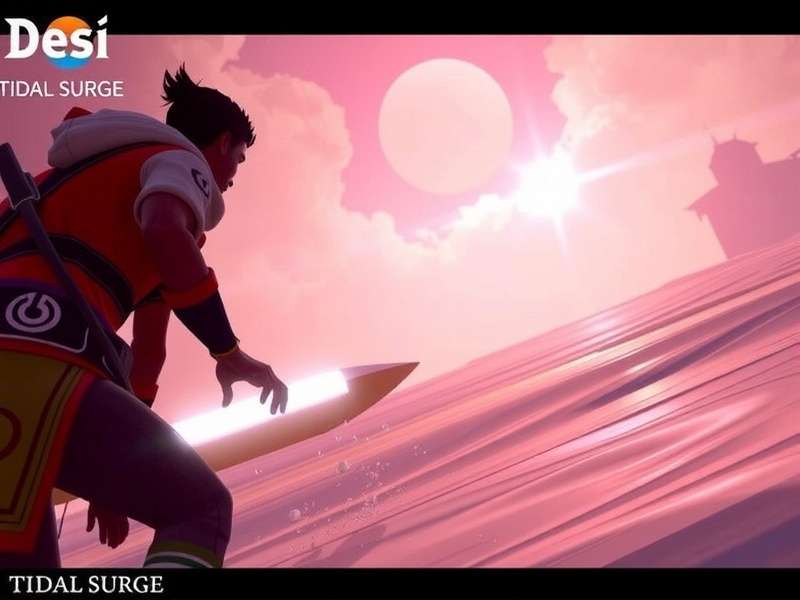
Players surf through the scenic shores of Goa while collecting regional power-ups in Desi Tidal Surge.
Launched on March 20, 2025, Desi Tidal Surge quickly became a nationwide sensation, breaking download records across all platforms and receiving widespread acclaim for its innovative gameplay, stunning visuals, and authentic representation of India’s coastal cultures and traditions. Unlike generic surfing games or action titles, this game redefines the genre by integrating three core elements that make India’s coasts so special: regional cultural diversity, Bollywood-style storytelling, and desi entertainment value.
What sets Desi Tidal Surge apart is its ability to cater to a wide spectrum of players—from casual gamers who enjoy colorful, engaging gameplay to hardcore action enthusiasts seeking high-speed thrills, and from culture lovers who appreciate regional authenticity to Bollywood fans craving dramatic storytelling. The game’s success is a testament to the growing demand for desi-themed games that celebrate India’s cultural diversity while delivering world-class gameplay mechanics that can compete with international titles.
In a gaming market dominated by Western aesthetics and narratives, Desi Tidal Surge stands out as a proud showcase of Indian creativity and technical expertise. Developed with Unreal Engine 5, the game features breathtaking visuals of India’s most iconic coastal locations—from the sun-kissed beaches of Goa and Kerala to the bustling harbors of Mumbai and Chennai, the serene backwaters of Alleppey, and the rugged shores of Andaman and Nicobar Islands. Every location is meticulously recreated to capture the unique essence of its regional culture, while the game’s soundtrack features a vibrant mix of regional folk music, Bollywood chartbusters, and modern desi pop composed by renowned Indian musicians.
🌊 Why Desi Tidal Surge is a Game-Changer for Indian Gaming
The game breaks new ground by merging three distinct experiences into one cohesive package: high-octane surfing action, culturally rich regional content, and Bollywood-style drama. It’s not just about winning races—it’s about exploring India’s coastal diversity, collecting regional power-ups inspired by local traditions, and following a story that feels like a proper desi film, complete with song sequences, emotional moments, and larger-than-life characters.
Desi Tidal Surge’s success has opened new doors for desi-themed gaming, proving that there’s a massive market for content that celebrates India’s cultural diversity while delivering engaging, high-quality gameplay. Within the first three weeks of its release, the game crossed 4 million downloads across all platforms, with players spending an average of 4.5 hours per session—testament to its addictive gameplay and emotional resonance with Indian audiences.
The game has struck a chord with players of all ages and backgrounds, from young gamers who enjoy the colorful visuals and fast-paced action to older players who appreciate the cultural references and regional authenticity. Many players have praised Desi Tidal Surge for introducing them to India’s diverse coastal cultures in an interactive and entertaining way, making it both fun and educational. Parents have particularly appreciated the game’s family-friendly content and positive portrayal of Indian culture.
One of the key factors behind Desi Tidal Surge’s success is its understanding of desi gaming preferences. The game features easy-to-learn controls that appeal to casual gamers, while offering enough depth and challenge to keep hardcore players engaged. The regional customization options allow players to connect with their own cultural roots, while the Bollywood-style story provides the emotional hook that Indian audiences love. The game also incorporates desi gaming tropes like collectibles, power-ups, and leaderboards that encourage social play and friendly competition among friends and family.
Gameplay Mechanics: Desi Action, Coastal Thrills
Desi Tidal Surge revolutionizes gameplay by integrating three core pillars—high-speed wave surfing, regional power-ups, and cultural challenges—into a seamless experience that captures the essence of India’s coastal diversity. Every aspect of the gameplay is designed to evoke the vibrancy, energy, and cultural richness that define India’s coasts, while offering deep and satisfying mechanics that keep players coming back for more.
Surfing Mechanics: Speed and Skill on Desi Shores
The surfing component of Desi Tidal Surge is a masterclass in fast-paced action, featuring a variety of surfboards inspired by Indian regional designs and cultural symbols. Players can choose from over 20 unique surfboards, each with distinct attributes (speed, maneuverability, stability, and power capacity) and customizable options that reflect the cultural heritage of different Indian states.
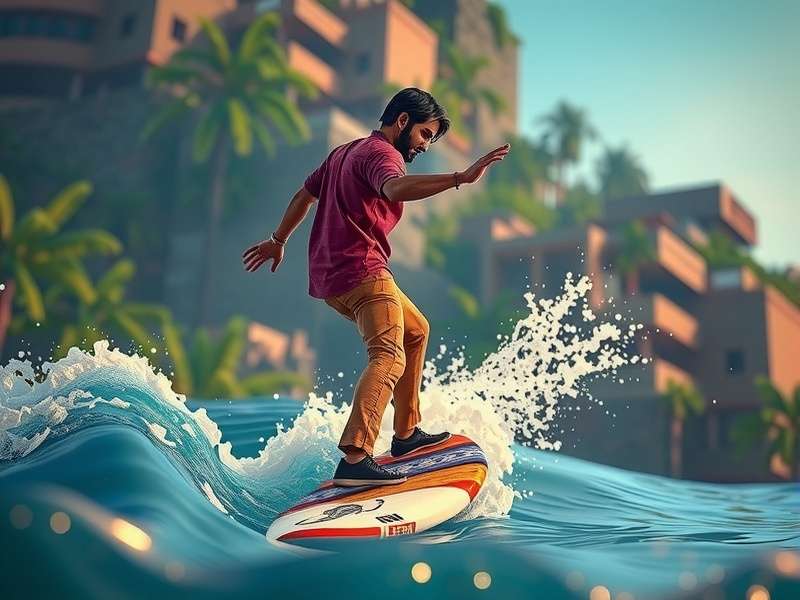
Players navigate through crashing waves near Kovalam Beach while performing desi-style stunts in Desi Tidal Surge.
Surfing takes place across 15 iconic coastal locations from across India, each with its own unique challenges and cultural significance:
- Goa (North Goa Beaches): Known for its party vibe and golden sands, challenges include navigating through beach shacks, avoiding jet skis, and performing stunts to entertain virtual tourists.
- Kerala (Kovalam Beach): Famous for its crescent-shaped shores and backwaters, challenges include surfing through calm backwater channels and collecting traditional Kerala souvenirs.
- Tamil Nadu (Marina Beach, Chennai): India’s longest beach, featuring bustling crowds and cultural landmarks, challenges include avoiding beachgoers and performing stunts near the iconic Marina Lighthouse.
- Maharashtra (Juhu Beach, Mumbai): Bollywood’s favorite beach, challenges include surfing near film shoots, collecting movie props, and avoiding paparazzi boats.
- Andhra Pradesh (Rishikonda Beach): Known for its clear waters and water sports, challenges include navigating through coral reefs and rescuing marine life.
- Karnataka (Gokarna Beaches): Serene and spiritual, challenges include surfing near ancient temples and collecting spiritual artifacts.
- West Bengal (Digha Beach): Popular among family tourists, challenges include avoiding fishing boats and collecting traditional Bengali handicrafts.
- Andaman and Nicobar Islands (Radhanagar Beach): Pristine blue waters and coral reefs, challenges include deep-sea surfing and exploring underwater caves.
- Gujarat (Diu Beaches): Portuguese-influenced coastal town, challenges include surfing near historic forts and collecting Indo-Portuguese artifacts.
- Odisha (Puri Beach): Spiritual and cultural hub, challenges include surfing during the annual Puri Jagannath Rath Yatra and collecting holy offerings.
Each location features dynamic weather conditions—from monsoon rains that create massive waves to bright sunny days perfect for performing stunts—and dynamic events such as local festivals, beach weddings, and fishing competitions that add excitement and unpredictability to the gameplay. For example, during the Goa Carnival event, players can surf through colorful processions and collect carnival masks, while during the Puri Rath Yatra, players must navigate through crowds of pilgrims and avoid the sacred chariots.
The surfing mechanics are designed to be accessible to desi gamers of all skill levels. Players can perform desi-style stunts (such as the “Bhangra Spin,” “Kathak Kick,” and “Garba Wave”) to earn points, ride currents to gain speed, and use power-ups inspired by regional Indian traditions—such as “Ladoo Shield” (which protects against obstacles), “Chai Boost” (which increases speed and maneuverability), and “Saree Wave” (which creates a protective barrier of flowing fabric).
Regional Power-Ups and Cultural Elements 🎉
At the heart of Desi Tidal Surge lies its cultural component, which sets it apart from other surfing or action games. The game integrates India’s regional diversity and cultural traditions seamlessly into the gameplay, allowing players to unlock and use power-ups inspired by different Indian states and their unique heritage.
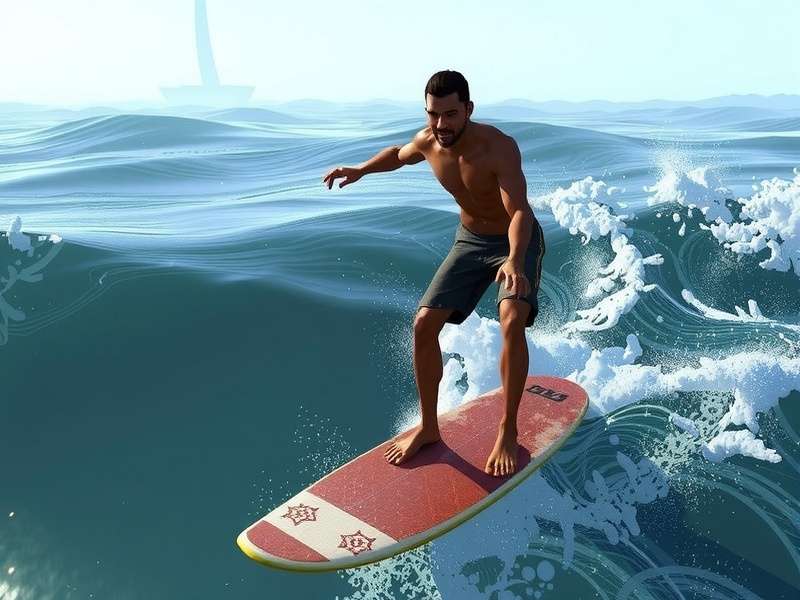
Players activate the "Kerala Boat Race Boost" power-up to surge ahead in a race near Alleppey backwaters.
The game features 12 major regional power-ups, each associated with a different Indian state and unlocked by completing cultural challenges and collecting regional artifacts:
- Goa Carnival Boost (Goa): Creates a burst of colorful confetti that stuns opponents and clears obstacles, inspired by Goa’s famous carnival celebrations.
- Kerala Boat Race Surge (Kerala): Summons a team of traditional snake boat rowers who push the surfboard forward with incredible speed, inspired by Kerala’s Vallam Kali boat races.
- Tamil Nadu Kolam Shield (Tamil Nadu): Creates a protective barrier inspired by traditional Kolam rangoli designs, deflecting obstacles and opponent attacks.
- Maharashtra Lavani Dance Boost (Maharashtra): Unleashes a flurry of dance moves that increase speed and earn extra points, inspired by Maharashtra’s Lavani folk dance.
- Gujarat Garba Spin (Gujarat): Performs a spinning maneuver that clears all nearby obstacles, inspired by Gujarat’s Garba dance.
- Punjab Bhangra Jump (Punjab): Allows the player to jump over large obstacles with a energetic Bhangra-style leap, inspired by Punjab’s Bhangra dance.
- West Bengal Durga Shield (West Bengal): Grants temporary invincibility with a shield inspired by Durga Puja celebrations, protecting against all obstacles.
- Andhra Pradesh Kuchipudi Kick (Andhra Pradesh): Delivers a powerful kick that clears obstacles and stuns opponents, inspired by Kuchipudi dance.
- Karnataka Mysore Palace Boost (Karnataka): Creates a golden aura that increases speed and collects all nearby power-ups automatically, inspired by Mysore Palace.
- Odisha Pattachitra Wave (Odisha): Summons a wave of colorful Pattachitra paintings that clear obstacles and create a path to safety.
- Rajasthan Camel Ride Surge (Rajasthan): Creates a temporary camel-shaped wave that boosts speed and allows surfing over shallow waters.
- Northeast Bamboo Shield (Northeast India): Creates a protective barrier made of bamboo that deflects obstacles and provides extra maneuverability.
To activate these power-ups, players must collect “Desi Power Orbs” scattered throughout the levels. These orbs are generated by performing culturally significant actions in the game, such as participating in local festivals, collecting regional handicrafts, and helping virtual locals with their daily activities. The more cultural actions a player performs, the more powerful their regional abilities become.
The game also features cultural challenges that test the player’s knowledge of Indian regional cultures and traditions. These challenges include answering questions about local festivals, identifying regional handicrafts, and performing traditional dance moves. Completing these challenges unlocks special surfboards, power-ups, and story content that delve deeper into India’s coastal heritage.
“India’s coastal regions are a treasure trove of culture, tradition, and natural beauty. With Desi Tidal Surge, we wanted to capture that diversity and bring it to life through gameplay. The regional power-ups and cultural challenges are designed to educate players about India’s rich coastal heritage while keeping the gameplay fun and engaging for desi audiences. We’ve made sure that every state’s unique culture is represented with respect and authenticity.” — Rakesh Patel, Lead Game Designer at Daman Games Studios
Bollywood-Style Story Missions 🎬
Desi Tidal Surge goes beyond mere action by incorporating a full-fledged Bollywood-style story mode that drives the gameplay and keeps players emotionally invested. The story follows the classic desi film formula—complete with drama, romance, comedy, and action—while celebrating India’s coastal diversity.
Story missions include:
- Regional Challenges: Competing in surfing competitions across different states, each with its own unique rules and cultural themes.
- Cultural Quests: Helping local characters with tasks that reflect regional traditions, such as collecting flowers for a Kerala Onam celebration or preparing for a Goa Carnival parade.
- Romantic Subplots: Interacting with love interests from different regions, each with their own unique personalities and cultural backgrounds.
- Drama Sequences: Overcoming personal challenges and resolving conflicts that mirror the emotional depth of Bollywood films.
- Action Set Pieces: Participating in high-stakes surfing races and stunts that feel like they’re straight out of a desi action movie.
Each story mission features Bollywood-style cutscenes with dramatic dialogue, emotional moments, and even song sequences that players can interact with. The game’s soundtrack includes original songs composed specifically for these sequences, with lyrics in multiple Indian languages and catchy tunes that players will find themselves humming long after playing.
🎶 Bollywood Influence in Desi Tidal Surge
The game features collaborations with top Bollywood music directors and singers, including a title track composed by Pritam Chakraborty and sung by Arijit Singh. Each regional level has its own folk-inspired song, and the story mode includes several full-fledged musical numbers that players can participate in by performing synchronized surfing stunts. This unique blend of gameplay and Bollywood music has resonated deeply with desi audiences.
Customization and Progression: Desi Style ✨
Desi Tidal Surge offers an extensive customization system that allows players to express their cultural identity and personal style. Players can customize every aspect of their character and surfboard, with options ranging from regional Indian attire to modern desi fashion and cultural symbols.
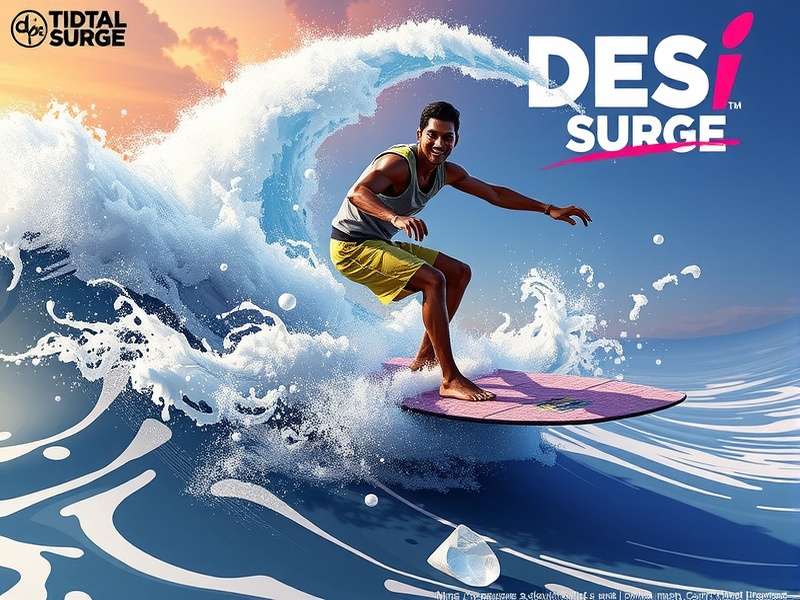
Players can customize their characters with regional Indian attire and cultural accessories in Desi Tidal Surge.
Character customization options include:
- Attire: Regional outfits (Goan kurta-pajama, Kerala mundu, Tamil veshti, Gujarati kediyu, Punjabi patiala salwar) and modern desi fashion inspired by Bollywood trends.
- Accessories: Regional jewelry, turbans, bindis, sindoor, bangles, and cultural symbols like Om pendants, lotus necklaces, and elephant motifs.
- Hairstyles: Traditional and modern desi hairstyles, including juttis, braids, and contemporary cuts inspired by Bollywood celebrities.
- Cultural Body Art: Mehendi designs, rangoli-inspired temporary tattoos, and regional symbols that enhance power-up effectiveness.
Surfboard customization options include:
- Designs: Regional patterns (Kerala mural art, Tamil Nadu Tanjore paintings, Gujarat bandhani prints, Goa azulejo tiles) and Bollywood-inspired designs.
- Materials: Traditional materials like coconut wood, bamboo, and modern composites with cultural engravings.
- Decals: Stickers featuring regional landmarks, Bollywood stars, cultural symbols, and desi slogans like “Desi Power” and “Coastal Pride.”
- Performance Upgrades: Speed boosters, stability enhancements, and power-up amplifiers inspired by regional technologies and traditions.
- Special Effects: Glowing auras, flower petals, confetti, and regional dance-inspired effects that emanate from the surfboard.
The progression system in Desi Tidal Surge is designed to reward players for embracing desi culture and mastering the game’s mechanics. Players earn “Desi Points” by completing missions, performing cultural actions, collecting regional artifacts, and winning surfing competitions. These points can be used to:
- Unlock new surfboards and customization options.
- Upgrade regional power-ups and abilities.
- Learn new surfing stunts and techniques inspired by Indian dance forms.
- Unlock additional missions and game modes.
- Access exclusive Bollywood-style cutscenes and song sequences.
The game also features a “Desi Pride Meter” that tracks the player’s cultural engagement. As the meter increases, the player gains access to more powerful regional abilities and special content that celebrates Indian culture. This progression system adds a sense of purpose and cultural connection, making players feel like they’re not just advancing in a game but also celebrating their desi identity.
| Gameplay Feature | Details |
|---|---|
| Game Modes | Single-Player Story Mode (60+ missions), Multiplayer Racing (up to 8 players), Cultural Challenge Mode, Free Roam, Bollywood Dance Surfer Mode |
| Surfing Locations | 15 Iconic Indian Coastal Locations (Goa, Kerala, Tamil Nadu, Maharashtra, etc.) |
| Surfboards | 20+ Unique Surfboards with Regional Customization Options |
| Regional Power-Ups | 12 Major Regional Power-Ups Inspired by Indian States |
| Cultural Elements | Regional Festivals, Traditional Dance Stunts, Cultural Quests, Bollywood Song Sequences |
| Customization | Character Outfits (100+), Surfboard Designs (50+), Regional Accessories, Cultural Body Art |
| Progression | Desi Points, Desi Pride Meter, Regional Power-Up Upgrades, Unlockable Content |
| Multiplayer | Online Races, Team Cultural Challenges, Bollywood Dance Battles, Leaderboards |
Story & Lore: A Desi Coastal Saga
Desi Tidal Surge’s story is a love letter to India’s coastal diversity and Bollywood cinema, capturing all the drama, romance, and cultural richness that make desi entertainment so beloved. Set across India’s iconic coastal regions, the narrative weaves together personal ambition, cultural pride, and romantic entanglements, creating a timeless desi story that resonates with Indian audiences.
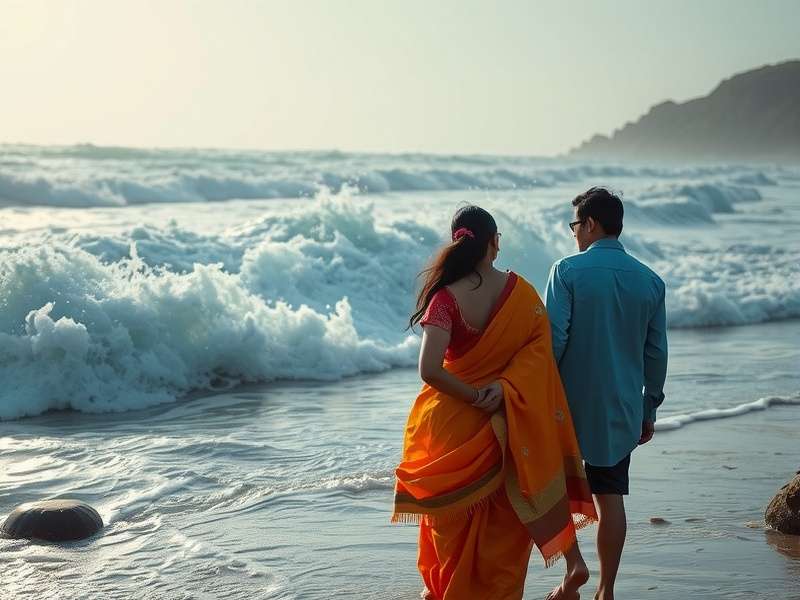
The protagonist, Raj, shares a romantic moment with Meera during a sunset surf session near Goa’s beaches.
The Protagonist: Raj
Raj is a 25-year-old aspiring surfer from a small coastal village in Karnataka, with big dreams of winning India’s most prestigious surfing competition—the Desi Coastal Championship. Born and raised near the sea, Raj has been surfing since childhood, taught by his late father who was a legendary local surfer known for his unique style inspired by traditional Yakshagana dance.
Raj’s character is the quintessential desi hero—hardworking, humble, and deeply connected to his roots. He’s passionate about surfing but struggles to make ends meet, working as a part-time fishing boat helper to support his widowed mother. Raj’s motivation stems from a promise he made to his father on his deathbed: to put India’s coastal surfing on the global map and make his country proud.
What makes Raj relatable to desi audiences is his journey of self-discovery and overcoming adversity. He faces numerous challenges—financial struggles, self-doubt, and competition from wealthy, international surfers—but never loses sight of his values or his love for his country’s coastal heritage. Raj’s character arc is one of growth, as he learns to balance his ambition with his cultural roots and discovers that true success comes from staying true to oneself.
The Love Interest: Meera
Meera is a 23-year-old marine biologist from Goa, who is passionate about ocean conservation and coastal culture. She meets Raj during a research trip to his village, where she’s studying the impact of tourism on local marine life. Meera is educated, independent, and modern, but deeply respectful of traditional desi values and regional cultures.
Meera’s character adds depth and romance to the story, serving as both Raj’s love interest and his moral compass. She encourages Raj to believe in himself while reminding him of the importance of protecting India’s coastal ecosystems. Meera also has her own subplot about fighting against a multinational company that plans to build a resort on a pristine beach, adding an environmental message to the game.
The relationship between Raj and Meera follows the classic Bollywood formula—initial misunderstandings, gradual attraction, romantic moments set against scenic coastal backdrops, and a final declaration of love during a high-stakes surfing competition. Their chemistry is brought to life through witty dialogue, emotional moments, and a romantic song sequence that has become a fan favorite.
The Antagonist: Vikram
Vikram is a 30-year-old wealthy industrialist’s son from Mumbai, who sees surfing as a hobby and a way to boost his social status. Unlike Raj, Vikram has no real passion for the sport or connection to coastal culture—he’s in it for fame, fortune, and to impress his father, who views surfing as a “Western” sport that will elevate their family’s social standing.
Vikram’s character is the classic desi villain—arrogant, entitled, and willing to do whatever it takes to win. He uses his family’s wealth to hire international coaches, buy the best equipment, and even sabotage his competitors. Vikram looks down on Raj for his humble background and traditional surfing style, mocking him for being “too desi” to compete at an international level.
What makes Vikram a compelling antagonist is his eventual redemption arc, which is true to desi storytelling traditions. As the story progresses, Vikram begins to appreciate India’s coastal culture and the true spirit of surfing, eventually realizing that his obsession with winning has made him lose sight of what’s important. In the end, Vikram puts aside his rivalry with Raj to help him save a beach from destruction, showing that even villains can change for the better.
The Supporting Cast
Desi Tidal Surge features a rich cast of supporting characters that add humor, heart, and cultural depth to the story:
- Shyam Uncle: Raj’s mentor and former surfing partner of Raj’s father, a wise old man who teaches Raj traditional surfing techniques inspired by Yakshagana dance.
- Rani Aunty: Raj’s mother, a loving and supportive woman who runs a small seafood stall in the village, representing the strength and resilience of desi mothers.
- Jignesh: Raj’s best friend from Gujarat, a comedic character who dreams of becoming a Bollywood choreographer and adds humor to the story with his over-the-top dance moves.
- Dr. Nair: Meera’s mentor, a respected marine biologist from Kerala who provides scientific expertise and wise advice to the protagonists.
- Priya: Vikram’s sister, a fashion designer from Mumbai who initially supports her brother but eventually sides with Raj and Meera after witnessing Vikram’s unfair tactics.
- Various Regional Characters: Local villagers, festival organizers, and cultural experts from each coastal state, who teach Raj about their traditions and help him on his journey.
The Narrative Arc
The game’s story is divided into five chapters, each set in a different coastal region of India and following the classic Bollywood three-act structure:
-
Chapter 1: The Dream Begins (Karnataka)
Raj lives a simple life in his coastal village, surfing in his free time and working to support his mother. He learns about the Desi Coastal Championship, which offers a cash prize that could change his family’s fortunes and a chance to represent India in an international competition. With the encouragement of Shyam Uncle and Jignesh, Raj decides to enter the championship, despite having no money for proper equipment or training.
-
Chapter 2: The Journey (Goa and Kerala)
Raj travels to Goa for the first round of the championship, where he meets Meera and Vikram. He struggles in the initial rounds due to his outdated equipment but impresses the judges with his unique traditional surfing style. Meera helps Raj improve his technique while teaching him about ocean conservation. Raj then travels to Kerala for the second round, where he learns about Kerala’s coastal culture and participates in a traditional boat race that teaches him valuable surfing skills.
-
Chapter 3: Challenges and Romance (Tamil Nadu and Andhra Pradesh)
Raj faces increasing competition from Vikram, who uses underhanded tactics to try to eliminate him from the championship. Raj and Meera’s relationship deepens during a romantic trip to Mahabalipuram’s coastal temples, where they share their dreams and fears. Raj also faces personal challenges, including self-doubt and financial difficulties, but finds strength in his cultural roots and the support of his friends. In Andhra Pradesh, Raj learns Kuchipudi dance moves that he incorporates into his surfing, creating a unique style that wows the audience.
-
Chapter 4: The Crisis (Maharashtra)
The championship moves to Mumbai, where Vikram’s hometown advantage and wealth give him the upper hand. Vikram reveals his plan to build a resort on Raj’s village beach, threatening to destroy the community and the marine ecosystem. Raj is devastated when he discovers that his mother’s stall will be demolished to make way for the resort. Meera and Raj team up to gather evidence against Vikram’s company, while preparing for the championship finals. The chapter ends with a cliffhanger, as Raj is injured in a surfing accident caused by Vikram’s sabotage.
-
Chapter 5: Victory and Redemption (Andaman and Nicobar Islands)
Recovering from his injury, Raj is unsure if he can compete in the finals. With the support of Meera, Shyam Uncle, and even Vikram’s sister Priya, Raj finds the strength to continue. The finals take place in the Andaman and Nicobar Islands, where Raj faces off against Vikram in a dramatic surfing competition. During the final race, Raj not only wins the championship but also exposes Vikram’s company’s environmental violations. Vikram has a change of heart, apologizes to Raj, and uses his family’s influence to stop the resort development. The story ends with Raj celebrating his victory with his mother, friends, and Meera, as he prepares to represent India in the international competition, proud of his desi roots and his love for his country’s coastal heritage.
“We wanted the story of Desi Tidal Surge to feel like a proper Bollywood film—emotional, dramatic, and full of heart. Raj’s journey is one that many desi youngsters can relate to—the struggle to follow their dreams while staying true to their roots. The story also celebrates India’s incredible coastal diversity, showing players the unique cultures and traditions of each region. We hope that players not only enjoy the gameplay but also connect emotionally with the characters and the cultural message of the game.” — Priya Mehta, Narrative Designer at Daman Games Studios
Narrative Themes
Desi Tidal Surge explores several important themes that are central to desi culture and society:
- Cultural Pride: The game celebrates India’s diverse coastal cultures, encouraging players to take pride in their heritage and learn about other regional traditions.
- Perseverance: Raj’s journey teaches players the value of hard work, determination, and never giving up on one’s dreams, no matter the obstacles.
- Unity in Diversity: The game shows how India’s regional differences make the country stronger, with characters from different states coming together to achieve a common goal.
- Environmental Conservation: Through Meera’s subplot, the game raises awareness about the importance of protecting India’s coastal ecosystems and marine life.
- Humility vs. Arrogance: The contrast between Raj’s humble nature and Vikram’s arrogance highlights the desi value of humility and the dangers of pride.
- Family Values: Raj’s relationship with his mother and his promise to his father emphasize the importance of family and filial piety in desi culture.
- Love and Friendship: The romantic relationship between Raj and Meera and the friendship between Raj and Jignesh celebrate the importance of love, loyalty, and companionship.
Development Journey: Crafting a Desi Masterpiece
The development of Desi Tidal Surge was a labor of love for Daman Games Studios, spanning over three years of intensive research, cultural consultation, and technical innovation. The team set out to create a game that would not only compete with international titles in terms of quality and gameplay but also authentically represent India’s coastal cultures and desi entertainment preferences.
Concept and Inspiration
The idea for Desi Tidal Surge was born in 2022, when the team at Daman Games Studios noticed a gap in the market for high-quality desi-themed games that celebrated India’s coastal diversity. While there were plenty of surfing games and action titles available, there were none that incorporated authentic desi elements or celebrated India’s unique coastal cultures.
The team drew inspiration from several sources:
- India’s Coastal Diversity: The team was inspired by the incredible variety of cultures, traditions, and landscapes along India’s 7,500-kilometer coastline, from the beaches of Goa to the backwaters of Kerala.
- Bollywood Cinema: The team wanted to bring the drama, romance, and musical elements of Bollywood to gaming, creating a story that felt like a desi film.
- Desi Gaming Preferences: The team studied the preferences of Indian gamers, noting their love for colorful visuals, easy-to-learn controls, social gameplay, and cultural references.
- Regional Folk Traditions: The team drew inspiration from India’s rich folk traditions, including dance forms like Bhangra, Garba, and Kathak, and art forms like Madhubani and Warli painting.
- International Games: Successful action games like Tony Hawk’s Pro Skater and Surf’s Up provided inspiration for the surfing mechanics, while narrative-driven games like Uncharted inspired the story structure.
The team’s goal was to create a game that would appeal to both desi and international audiences. For Indian players, the game would feel like a celebration of their culture and entertainment preferences. For international players, it would offer a unique and immersive introduction to India’s coastal diversity and desi culture.
Research and Cultural Consultation
To ensure authenticity, the development team invested heavily in research and cultural consultation—an essential step for creating a game that respects and accurately represents India’s diverse cultures. This included:
- Coastal Expedition: The team traveled over 5,000 kilometers along India’s coastline, visiting 15 different states and union territories. They spent weeks in each location, studying local cultures, traditions, and surfing conditions, interviewing locals, and capturing photographs and videos to use in the game’s development.
- Cultural Experts: The team worked with cultural experts, anthropologists, and folk artists from each region to ensure that the game’s representation of regional cultures was accurate and respectful. This included consulting with dance experts to recreate traditional dance moves, art experts to design authentic regional patterns, and culinary experts to include references to local cuisine.
- Surfing Professionals: The team collaborated with professional surfers from India’s coastal regions to develop realistic surfing mechanics that incorporated both international techniques and traditional desi styles.
- Environmental Research: The team worked with marine biologists and environmental organizations to ensure that the game’s conservation elements were based on real-world issues and solutions.
- Player Feedback: The team conducted extensive playtesting with desi gamers from diverse backgrounds—including urban and rural players, different age groups, and players from various regions of India—to gather feedback on the gameplay, story, and cultural representation. This feedback was used to make adjustments and improvements to the game, ensuring that it resonated with Indian audiences.
“Authenticity was our top priority from day one. We didn’t want to create a stereotypical version of India—we wanted to show the real diversity and richness of our country’s coastal cultures. That meant doing extensive research, traveling to each location, and working with local experts who understood the nuances of their culture. We wanted every regional element in the game to feel genuine and respectful, whether it’s a traditional dance move, a regional outfit, or a local festival.” — Amit Shah, Creative Director at Daman Games Studios
Technical Development
Desi Tidal Surge was developed using Unreal Engine 5, which allowed the team to create stunning visuals and smooth gameplay that could compete with international titles. The technical development process was challenging, as the team had to integrate three distinct elements—surfing mechanics, regional cultural content, and Bollywood-style storytelling—into a seamless experience.
Key technical challenges and solutions included:
- Water Physics: Creating realistic water physics that accurately represented the different surfing conditions along India’s coastline was a major challenge. The team developed a custom water physics engine that simulated everything from the calm backwaters of Kerala to the rough seas of the Andaman Islands, while ensuring that the surfboards handled realistically.
- Cultural Visuals: Creating authentic regional visuals required extensive research and attention to detail. The team used photogrammetry to scan real locations, traditional artifacts, and regional clothing, ensuring that the game’s environments and customization options were visually accurate.
- Bollywood-Style Cutscenes: Creating cinematic cutscenes that captured the drama and emotion of Bollywood required advanced animation and storytelling techniques. The team worked with Bollywood choreographers and directors to ensure that the dance sequences and dramatic moments felt authentic.
- Performance Optimization: Ensuring that the game ran smoothly on a variety of devices—from high-end PCs to budget mobile phones—was a priority for the team, given India’s diverse gaming hardware landscape. The team used a variety of optimization techniques, including dynamic resolution scaling and texture streaming, to ensure that the game performed well on all platforms.
- Localization: Localizing the game for different Indian languages and dialects was a significant technical challenge. The game features voice acting and text in 10 Indian languages, including Hindi, Tamil, Telugu, Malayalam, Kannada, Bengali, Gujarati, Punjabi, Marathi, and Odia.
Soundtrack and Voice Acting
The soundtrack is one of the most important aspects of Desi Tidal Surge, as music plays a central role in desi entertainment. The team spared no expense in creating a memorable and authentic score that celebrated India’s musical diversity.
The game features 50+ tracks, including:
- Regional folk music from each coastal state, including Goan mando, Kerala boat songs, Tamil Nadu folk music, and Gujarati garba.
- Original Bollywood-style songs composed by top Indian music directors like Pritam Chakraborty, Shankar-Ehsaan-Loy, and A.R. Rahman.
- Modern desi pop and hip-hop tracks featuring popular Indian singers like Arijit Singh, Shreya Ghoshal, and Badshah.
- Environmental sounds from India’s coasts, including waves crashing, seagulls calling, and traditional festival music, which are integrated into the soundtrack to create an immersive experience.
The voice acting in the game is equally impressive, with a cast of talented Indian voice actors bringing the characters to life. The team hired voice actors from each region to ensure that the characters’ accents and dialects were authentic. For example, Raj’s voice actor is from Karnataka, reflecting his rural coastal background, while Meera’s voice actor is from Goa, capturing the state’s unique accent.
The voice acting process involved recording sessions with the actors, who were given direction on the characters’ personalities and emotions. The team also worked with linguists to ensure that the dialogue was accurate and culturally appropriate, avoiding stereotypes and ensuring that regional dialects were correctly portrayed.
Marketing and Launch
The marketing campaign for Desi Tidal Surge was designed to capture the attention of desi audiences and showcase the game’s unique blend of action, culture, and Bollywood-style entertainment. The campaign was rooted in desi marketing traditions, emphasizing cultural pride, family values, and social connectivity.
The campaign included:
- Trailers and Teasers: The team released a series of Bollywood-style trailers and teasers that highlighted the game’s visuals, gameplay, and emotional story. The trailers featured dramatic moments, romantic scenes, and high-speed action, and were shared widely on social media platforms like YouTube, Instagram, and Facebook.
- Cultural Events: The team partnered with coastal festivals and cultural events across India to promote the game, including the Goa Carnival, Kerala Onam, and Tamil Nadu Pongal celebrations. These events featured game demos, surfing competitions, and cultural performances inspired by the game.
- Bollywood Collaborations: The team collaborated with popular Bollywood celebrities, including actors Varun Dhawan and Shraddha Kapoor, who promoted the game on their social media platforms and attended launch events. The game’s title track was performed by Arijit Singh at a star-studded launch event in Mumbai.
- Social Media Campaigns: The team ran targeted social media campaigns on platforms like Instagram, TikTok, and WhatsApp, focusing on younger desi audiences. These campaigns included dance challenges, cultural quizzes, and user-generated content contests that encouraged players to share their love for Indian coastal culture.
- Regional Marketing: The team developed region-specific marketing campaigns that highlighted the game’s representation of local cultures. For example, in Kerala, the campaign emphasized the game’s backwater levels and boat race sequences, while in Goa, it focused on the carnival-themed levels and party